What’s Astronomy Shorts? It’s a series of short episodes that will give you a taste of the very diverse field of astronomy, hopefully enough to stir your curiosity. Each episode will reveal fascinating details and facts about celestial objects, space, and our universe as a whole. This is a shorter, perhaps lighter, version of Curious Minds, meant to satisfy your curiosity in between our regular Curious Minds episodes.
Subscribe: iTunes | Android App | RSS link | Facebook | Twitter
Explore episodes in other categories:
Astronomy & Space | Biology & Genetics | History | Information Technology | Medicine & Physiology | Physics | Technology
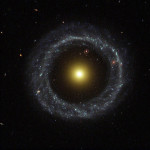 The Scale of The Universe
The universe we live in is really big: Its vastness is difficult to even comprehend. That vastness is why, even if our universe is teeming with life, it is unlikely that we will ever meet other intelligent life forms. Let’s take a closer look at the scales of distances, speeds and volumes in our universe.
Download MP3 | More Astronomy Shorts | Read the Full Transcript
- Links to our Twitter and Facebook page.
- Help us climb the charts! write a review on iTunes.
- Subscribe to the Podcast!

Credits
The Planet’s, Op.32 - Gustav Holst
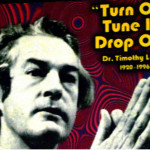 Dr. Timothy Leary helped kickstart the LSD’s involvement in the Hippie movement of the 1960’s - and was imprisoned for it. But what really makes LSD so dangerous? We’ll delve deep into the effects of LSD on the human brain.
 When Albert Hofmann accidentally discovered Lysergic Acid Diethylamide – LSD – he hoped that the unusual compound would help psychiatrists treat patients by inducing ‘temporary insanity’. It was the CIA who tested the LSD’s mind-bending potential as a psychological weapon, in a top-secret and horrifically cruel series of experiments known as MKULTRA.
 In the 19th century, two brave (and some might say - insanely brave) French physicians took to the streets of Hong Kong and Bombay and risked their own lives in the name of ridding Mankind - and the fleas - from their worst nightmare: The Black Death.
 The male Y-Chromosome holds tantalizing clues about our own, personal past - but that past can turn out to be very troubling. Tatiana
  The Molecular Clock technique was invented by Emile Zuckerkandl. Several decades later, Dr. Rebecca Cann, who examined samples of Mitochondrial DNA, made an amazing discovery: she confirmed the existence of a single Mitochondrial Eve, and solved a Paleoanthropological mystery: Earth was once home to many different Human Species - from Homo Erectus to the Neanderthals. Yet today, they are all gone. When and how did the other humanoids disappear? The answer is hidden, of all places, in out DNA.
 Poisons are an integral part of human history, as the story of king Mithridates reveals. But when Life Insurance was invented, poisoning became a plague in Victorian Britain. For many women, Arsenic poisoning was the perfect murder weapon - as was the case with Lady Charlotte Elizabeth Ursinus. Discover why Arsenic was known as the ‘inheritance powder’, and the biological mechanism that makes it so deadly. (Note: This episode is
  In the 1980’s, the British BBC invested millions of pounds on what should have been a technological marvel: a modern version of the famous medieval Domesday Book. Less then 15 years later, it’s system was unusable. Compare that expensive failure to the longevity of the Domesday Book: a record written on paper in Latin in the 11th century and is still readable today. What can these two case studies tell us about the challenges and potential solutions to Digital Preservation?
 In 1941 the British and Canadian navies managed, with great effort, to turn the tide and curb the U-Boats threat in the North Atlantic – but Admiral Dönitz was about to introduce a new kind of U-Boat – one that would deal a deadly blow to the British, American and Canadian forces.